In most languages, meaning lives in what is spoken. In Japanese, it often lives in what is not.
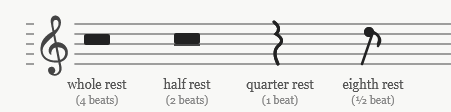
Japanese has a word “ma” (間) – that translates roughly as “negative space” or “pause” not emptiness. It is a charged, intentional gap. A breath between notes that makes the music whole – an intuitive musical rest between notes that gives the melody its breath. When a Japanese speaker trails off with “sō desu ne…” and lets the sentence dissolve, that dissolution is the sentence. The unfinished thought carries more weight than any conclusion could. This is silence as grammar.
In English, you must declare ‘I, you, she, they’. In Japanese, the subject vanishes constantly – context, musical rest- fill the space. To name the subject explicitly can even feel clumsy, almost rude, as if you’re spelling out what the listener was already trusted to understand. Fluency in Japanese is, in part, the fluency to read what was never said.
Then there is honne and tatemae – the private truth and the public face. What someone means and what someone says are understood by all parties to be different things, and the space between them is courtesy not ‘deception’. It is the grace of allowing the other person to navigate that gap with you.
In order to really learn Japanese is to learn that eloquence is not volume. The most precise communication can be a glance held a moment too long, a tea cup set down softly, a pause that everyone in the room understands perfectly – and no one will ever transcribe.
The unsaid, in Japanese, is not absence. It is the most carefully chosen word of all.